Arabic & RTL
Arabic game localization, built in — not bolted on
Most games reach Gulf players in English with Arabic added at the end, and players can tell. We build Arabic as a first-class language from the first screen, because right-to-left is a layout decision, not a settings toggle.
There is a particular kind of broken that Arabic-speaking players recognise instantly: text that overflows its button, a menu that mirrors correctly but leaves every icon pointing the wrong way, numerals in the wrong script, a date format nobody here uses, and dialogue that reads like a manual because it was translated line by line with no idea which character was speaking.
None of that is a translation problem, and no amount of re-translating fixes it. It is an architecture problem, created at the moment someone treated right-to-left as a language setting rather than a different layout. By the time the Arabic build is tested, the cost of unpicking it is enormous — which is why so many studios ship it anyway and hope.
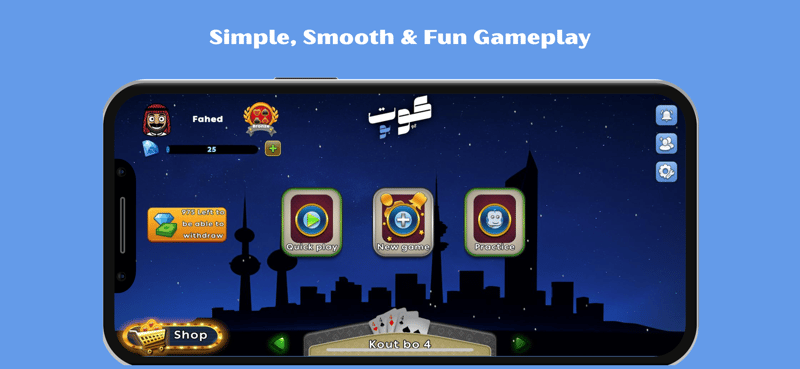
We approach it from the other end. Arabic is a first-class language in our own titles — KoutQ8, Nabsh and Arrab are all fully bilingual — so the RTL work is not a service we learned to sell, it is how our games are built. That is a different thing from a translation vendor, and it is the reason this page exists.
What's included
RTL layout architecture
Every screen, modal, HUD and transition built to mirror properly — including the icons, progress directions and animations that mirroring usually breaks.
Arabic typography
Type chosen for Arabic letterforms rather than inherited from a Latin design, with the line height, kashida behaviour and sizing Arabic actually needs.
Text expansion handling
UI that survives Arabic strings running longer or shorter than the English they replaced, tested against real copy rather than placeholder text.
Gulf-appropriate copy
Writing in natural Gulf Arabic with the register a game needs, not the formal register a legal document needs — and not machine translation.
Numerals, dates and currency
The right numeral script, date formats people here actually read, and local currency handling in stores and in-game purchases.
Cultural review
A pass over art, iconography, names and themes by people from the region — the cheapest possible time to catch something that would not land well.
Bilingual builds
One build serving both languages with a live switch, so an Arabic player and an English-speaking friend can sit in the same match.
Store localisation
Arabic listings, screenshots and metadata for the App Store and Google Play — the part that decides whether anyone installs the localised build at all.
Where this applies
The same discipline applies wherever the interface lives — the constraints change, the principle does not.
Mobile and PC games, where RTL touches layout groups, text mesh and input.
High-fidelity 3D titles and the UMG interfaces layered over them.
Browser games and web apps, where CSS logical properties do the work if you use them from the start.
Native app shells, store listings, and the system-level RTL that surrounds the game.
How we approach it
- 01
Audit
We go through the game screen by screen in Arabic and report what breaks, ranked by how expensive it is to fix. You get the honest list even if you decide not to hire us for the work.
- 02
Architecture
Layout, typography and string handling are fixed at the structural level before any copy is written, because translating into a broken layout just produces a broken layout in two languages.
- 03
Copy
Arabic written with the game's context in hand — who is speaking, what the tone is, how much room the string has — rather than a spreadsheet of disconnected lines.
- 04
Cultural pass
Art, names, iconography and themes reviewed by people from the region before launch rather than after a complaint.
- 05
Test in Arabic
The Arabic build is played as its own game, on real devices, not spot-checked as a variant of the English one. Most RTL bugs only appear to someone actually playing in Arabic.
Why a studio, not an agency
Search for Arabic game localization and almost everything you find is a translation company. They are good at translation. The problem is that most of what goes wrong in an Arabic build is not translation.
We can change the build
An agency hands back a file. When the fix is a layout group, a shader, or how the UI is composed, someone has to open the project — and that is the part we do.
We write with context
Game copy translated out of context reads wrong even when every word is right. We write it inside the game, seeing the screen it lands on.
It is how we ship anyway
Our own titles are bilingual, so this is not a capability we assembled for a client brief. It is the default we already work in.
Proof from our portfolio
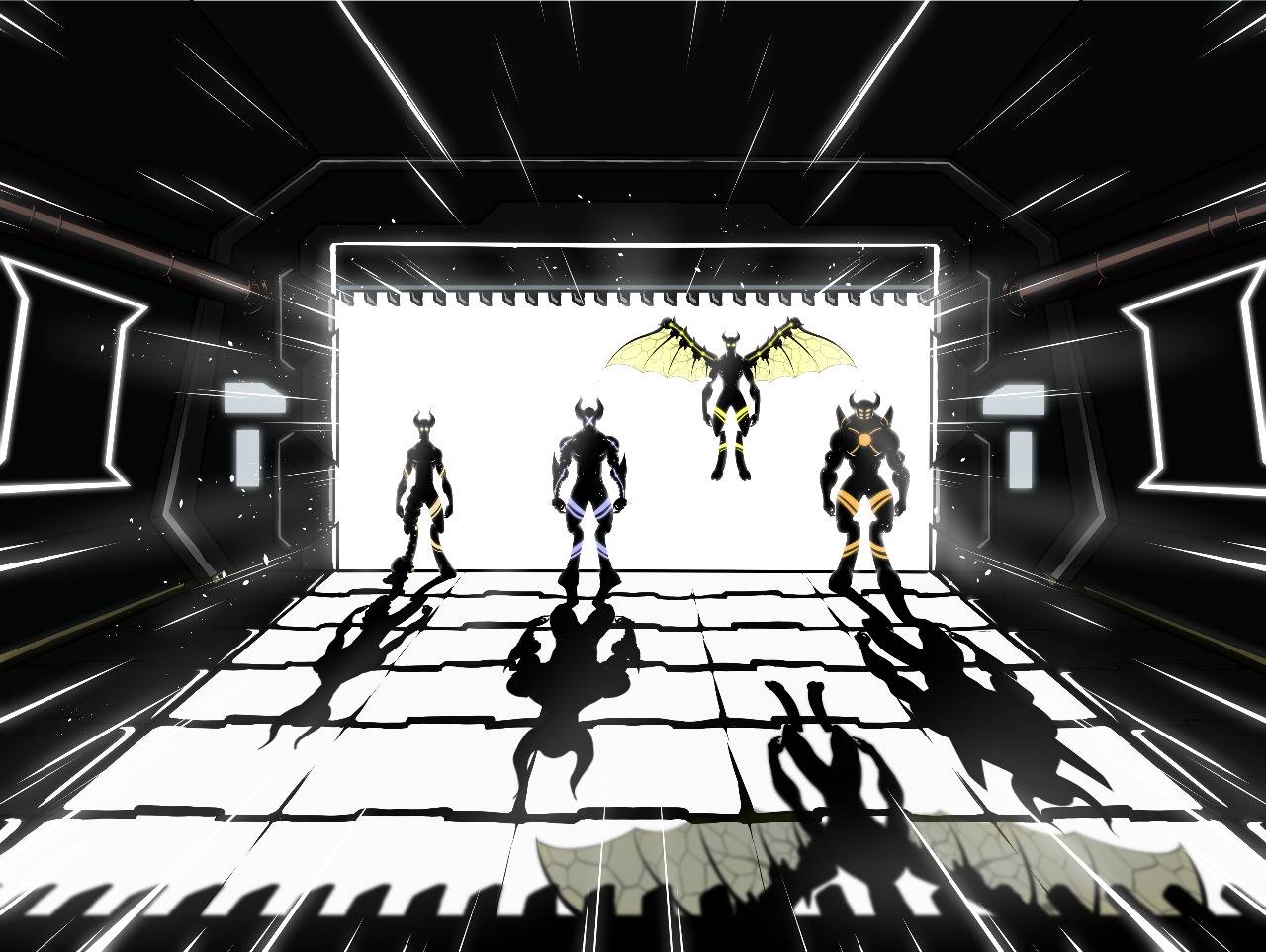
Bilingual, Arabic-first titles we built ourselves — the same standard we would hold your game to.
Arabic localization FAQ
Both, and that is the point. The writing matters, but most of what makes an Arabic build feel wrong is layout, typography and input — engineering work a translation vendor cannot do because it requires opening the project.
Usually. We start with an audit and tell you honestly what it will take — sometimes it is a clean pass, sometimes the UI needs restructuring first. You get that assessment before committing to the work.
Before the first screen is built, if you have the choice. Retrofitting right-to-left into a finished game is one of the most expensive corrections in this business, and it is entirely avoidable by deciding early.
Whichever the game needs — and that is a real decision, not a detail. Modern Standard reads correct but distant; Gulf dialect reads like a person. Casual and social titles usually want the latter, and we will give you an opinion rather than wait to be told.
Yes, on real devices, played as its own game. Most RTL problems are invisible to someone checking an Arabic build in English — they only surface for a person actually playing in Arabic.
Shipping to Arabic-speaking players?
Send us the build or the plan and we will tell you honestly what standing up properly in Arabic would take.